Vertical Slider Secondary Glazing: The Perfect Match for Sash Windows
Penny Hargreaves
Heritage Acoustics Writer

If you live in a Victorian or Georgian home, you know the struggle. Those original timber sash windows are absolutely stunning: they’re the soul of the property. But let’s be honest: they can also be a bit of a nightmare. They rattle when the wind blows, they let in a draft that could chill a penguin, and if you live on a busy street, it feels like the traffic is practically in your living room.
You’ve probably looked into replacement windows, only to find out that double-glazing sash windows is either eye-wateringly expensive or simply not allowed if you live in a conservation area.
This is where vertical slider secondary glazing comes in. It is, quite literally, the perfect match for sash windows. At Secondary Glazing Specialist, we see this as the “gold standard” for period properties because it solves all the modern problems of insulation and noise without ruining the historic look of your home.
In this guide, we’re going to dive deep into why vertical sliders are the go-to choice, the science behind that 100mm air gap, and how you can finally get a quiet, warm home without losing your original windows.
What Exactly is Vertical Slider Secondary Glazing?
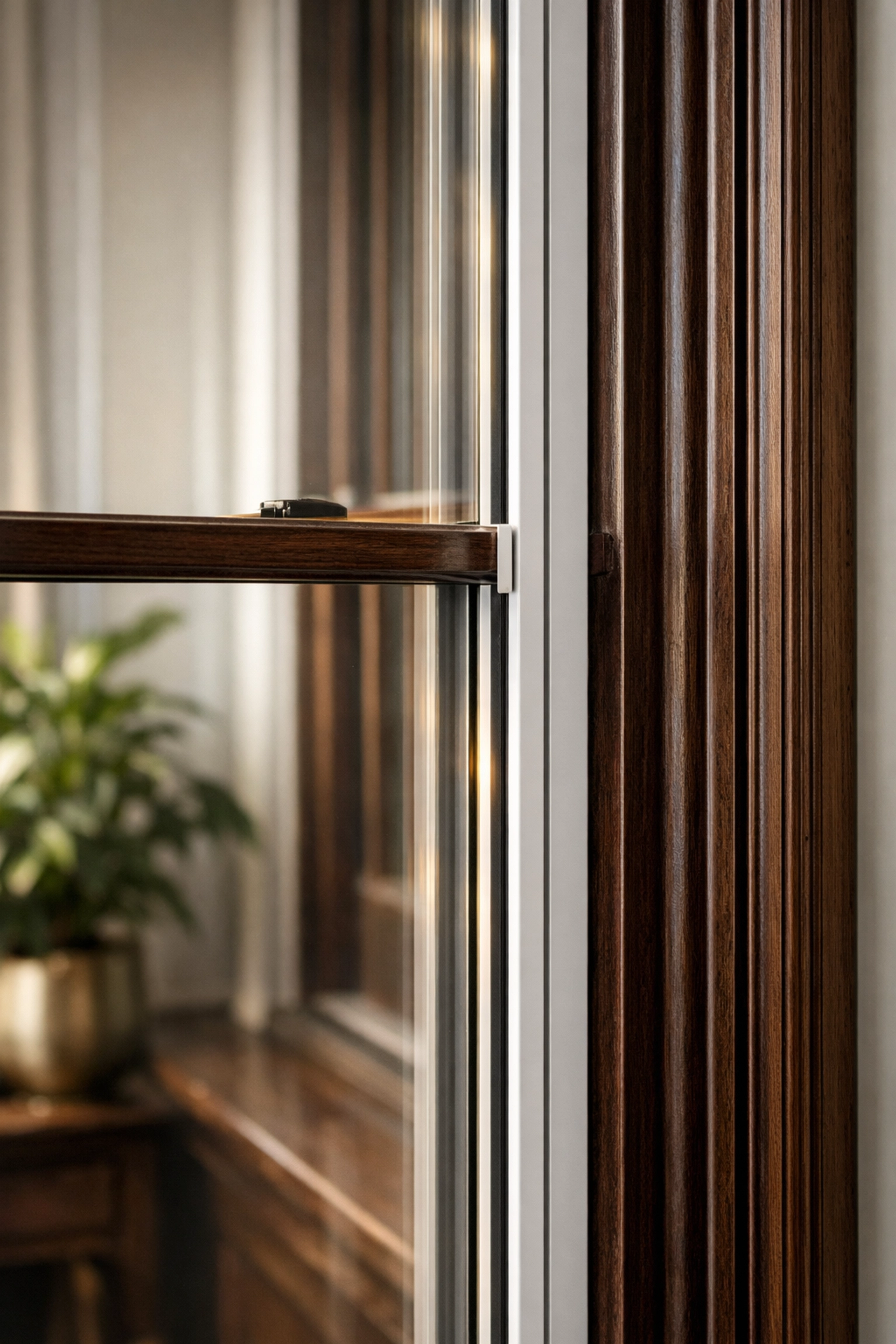
Before we get into the “why,” let’s talk about the “what.” A vertical slider is a secondary window frame made of slimline aluminium that is installed on the inside of your existing window.
The clever part? It mimics the exact movement of your original sash window. It has a top pane and a bottom pane that slide up and down, just like the timber ones behind them. Because the frames are so slim, they align perfectly with your original meeting rails (the bit where the two windows overlap in the middle). This means that from the street, you can’t even tell they’re there.
Why It’s the Perfect Match for Your Sash Windows
When we talk about secondary glazing for listed buildings or conservation areas, vertical sliders are usually the only option that heritage officers really love. Here’s why:
1. Maintaining Original Sightlines
The biggest fear for any period home owner is “cluttering” the window. You don’t want a big, chunky frame blocking your view or looking messy. Vertical sliders are designed with “sightlines” in mind. We build them to match the exact dimensions of your existing sashes. When they’re installed correctly, the secondary glazing disappears into the background.
2. No Structural Changes
Unlike full replacements, secondary glazing is “reversible.” This is music to the ears of local councils. Because you aren’t removing the original 150-year-old timber, you aren’t damaging the historical integrity of the building. It’s an addition, not a replacement. For the full breakdown of why this matters, see our guide on the Listed Building Loophole.
3. Smooth Operation
Modern vertical sliders use high-quality spring balances. If your original windows are painted shut or heavy to lift, you’ll be amazed at how easily the secondary units move. They stay exactly where you put them, allowing for easy ventilation.
The Secret to Silence: 10.8mm Acoustic Laminate Glass
If you’ve landed on this page because the sound of sirens, buses, or late-night pedestrians is driving you crazy, this is the section for you.
Standard secondary glazing is good, but if you want “library quiet,” you need to look at the glass type. We highly recommend 10.8mm acoustic laminate glass.
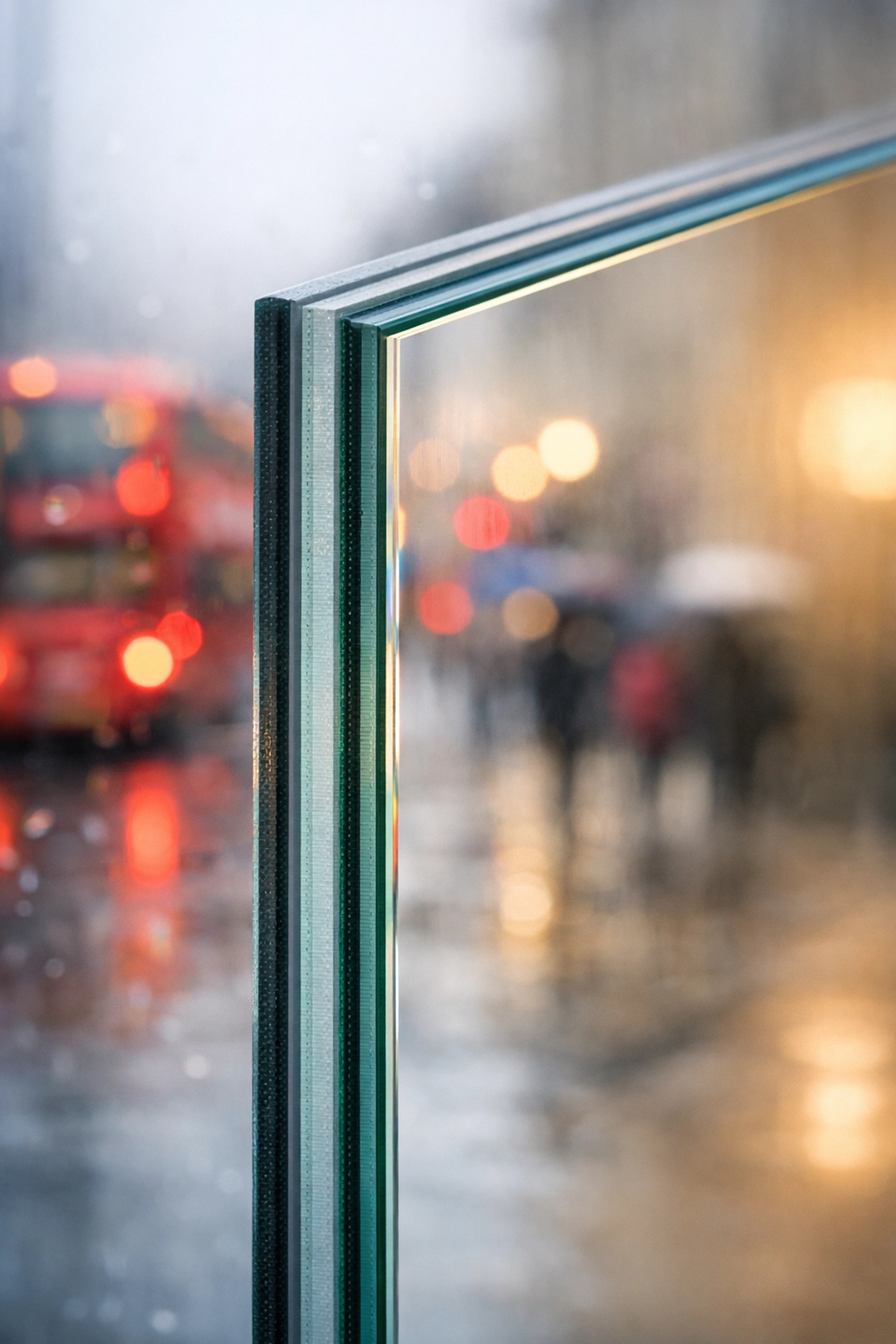
Most standard windows use 4mm or 6mm glass. Acoustic laminate is different. It’s made of two layers of glass sandwiched together with a special noise-dampening interlayer. This interlayer acts like a sponge for sound waves, soaking up the vibration instead of letting it pass through into your home. For the full science, read our deep dive on why 10.8mm acoustic laminate is the gold standard.
When you combine this heavy-duty glass with a vertical slider, you are creating a massive barrier against the outside world.
The Power of the 100mm+ Air Gap
One of the most common questions we get is: “Why is secondary glazing better for noise than double glazing?”
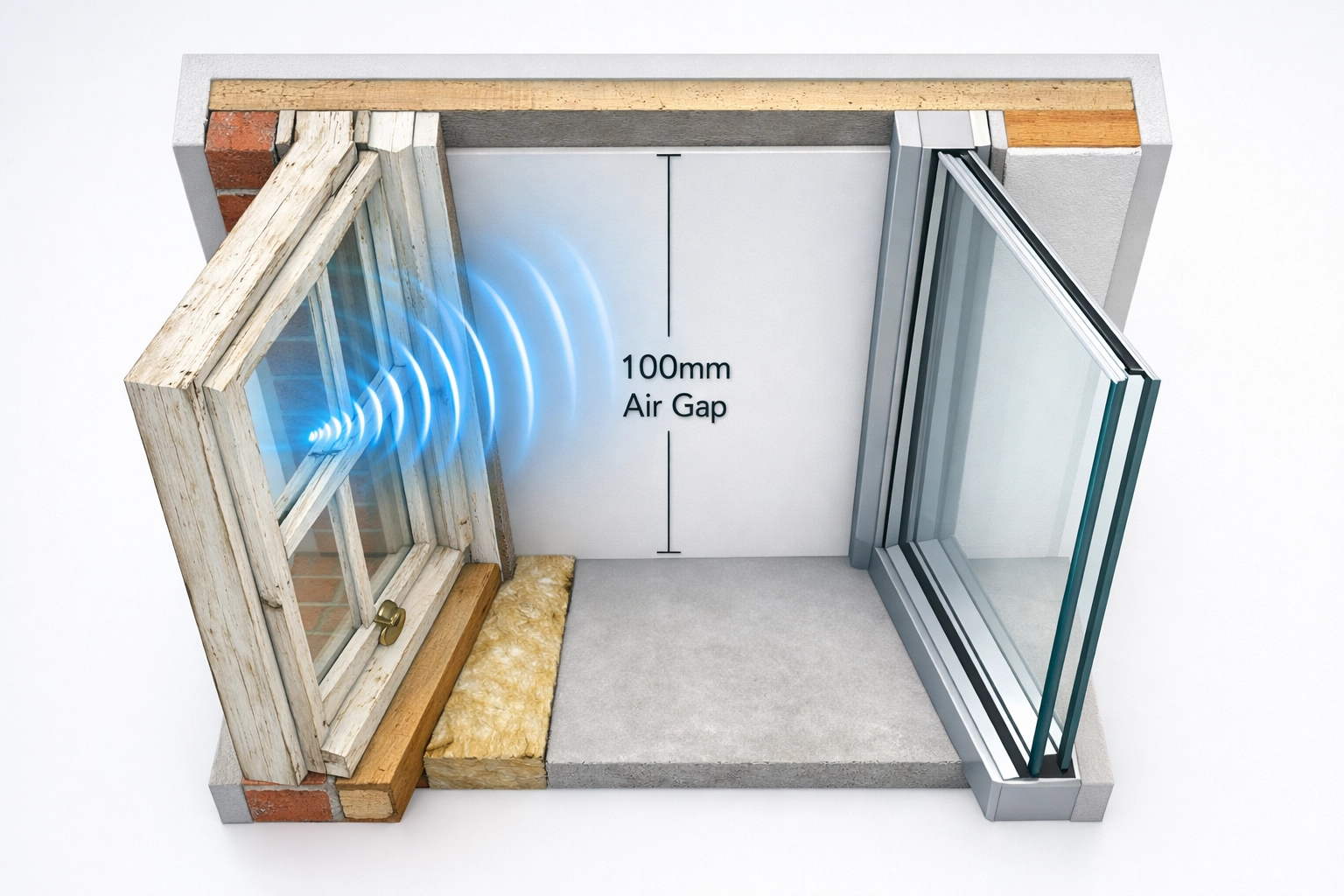
The answer is the gap. In a standard double-glazed unit, the two panes of glass are usually only 16mm to 20mm apart. This is great for heat, but sound waves can easily jump across that small gap.
With vertical slider secondary glazing, we aim for a 100mm+ air gap between the original window and the new secondary unit. This large cavity of air acts as a buffer. By the time the sound of a revving engine passes through your original window, travels across 100mm of air, and hits a thick sheet of 10.8mm acoustic glass, it has lost almost all its energy. For a full head-to-head comparison, see our article on secondary glazing vs double glazing for traffic noise.
This setup can reduce external noise by up to 80%. It’s the difference between hearing a conversation on the sidewalk and hearing absolutely nothing at all.
Thermal Insulation: Saying Goodbye to Drafts
While soundproofing is a huge win, the impact on your heating bills shouldn’t be overlooked. Traditional sash windows are notorious for being “leaky.” Even if they are in good condition, timber naturally expands and contracts, leaving tiny gaps where heat escapes.
By installing a secondary vertical slider, you are effectively sealing the room. The aluminium frames feature high-quality brush seals that stop drafts in their tracks. This extra layer of insulation can reduce heat loss through your windows by over 60%. In a large Victorian house with high ceilings, that adds up to a massive saving on your energy bills every year. For more on the thermal side, see our guide on insulating a listed building without planning permission.
Practicality: Cleaning and Maintenance
One worry people have is: “How do I clean the original windows once the secondary glazing is in the way?”
Modern vertical sliders have a brilliant “tilt-in” facility. Each panel can be unlocked and pivoted inwards. This gives you full access to the back of the secondary glass and the front of your original sash window. You don’t need to be a professional window cleaner or have a giant ladder to keep things looking sparkly.
Secondary Glazing Sash Windows Cost: What to Expect
Let’s talk numbers. When considering secondary glazing sash windows cost, it’s important to look at the long-term value.
Replacing a single timber sash window with a high-quality double-glazed replica can easily cost £1,500 to £2,500 per window. If you have a whole house to do, you’re looking at the price of a small sports car.
Secondary glazing is significantly more cost-effective. While the price depends on the size of the window and the type of glass (acoustic laminate costs more than standard glass), you are generally looking at a fraction of the cost of full replacement. Plus, you save money on decorating because there’s no need to rip out architraves or disturb your internal plasterwork.
It’s an investment that pays for itself through lower energy bills and, more importantly, the increased comfort of your home.
Is It Right for Your Home?
If you are living in a period property, vertical sliders are almost always the right choice for your main living areas and bedrooms. However, they aren’t the only style available. If you have wide casement windows or small bathroom windows, you might want to check out our guide on choosing the right fit for secondary glazing styles to see how horizontal sliders or hinged units compare.
Summary of Benefits
- Aesthetics: Matches your sash window lines perfectly.
- Noise Control: Best-in-class reduction with 10.8mm glass and a 100mm gap.
- Warmth: Eliminates drafts and slashes heat loss.
- Permission: Generally accepted for secondary glazing for listed buildings.
- Functionality: Tilt-in panels for easy cleaning.
Ready to Transform Your Windows?
At Secondary Glazing Specialist, we’ve spent years helping homeowners across the UK reclaim their peace and quiet. We know how much you love your home’s character, and we’re here to help you keep it: just without the cold and the noise.
Vertical sliders aren’t just a home improvement; they’re a lifestyle upgrade. Imagine sitting in your favourite chair by the window on a rainy Tuesday, watching the world go by in total silence and warmth. That’s what we deliver.
If you’re ready to get a quote or just want to chat about which glass type is best for your specific street, get in touch with us today. Let’s make those drafty sashes a thing of the past!


