Understanding U-Values: The Science of Thermal Efficiency in Secondary Glazing
Vague promises of ‘warmth’ aren’t enough. Here’s the physics of heat loss, the metrics that matter, and how Low-E coatings and air gaps drive U-values down to 1.8.
By James Whitfield, Conservation Planning Advisor••6 min read
When we talk about home improvement, specifically in the context of drafty period properties or modern flats in the heart of the city, “thermal efficiency” is a term that gets thrown around constantly. But for the discerning homeowner or property manager, vague promises of “warmth” aren’t enough. You need the data. You need to understand the physics of heat loss and the specific metrics that determine whether an investment is worth the capital.
In the industry, the gold standard for measuring this performance is the U-Value. If you are looking for secondary glazing London specialists to upgrade your heritage home, understanding this number is the difference between a superficial fix and a high-performance thermal upgrade.
In this technical guide, we’re going to unpack the science of U-Values, explain why secondary glazing is often a superior thermal performer to standard double glazing, and look at the components: from Low-E coatings to air gaps: that drive these numbers down.
What Exactly is a U-Value?
Technically known as Thermal Transmittance, the U-value measures the rate of heat transfer through a structure (like a window, wall, or roof) divided by the difference in temperature across that structure.
The units are expressed as W/m²K (Watts per square metre-Kelvin).
Here is the simple rule: The lower the U-value, the better the insulator.
A high U-value means heat is escaping rapidly from your warm living room into the cold London air. A low U-value means the material is resisting that heat flow, keeping the energy: and your money: inside the building.
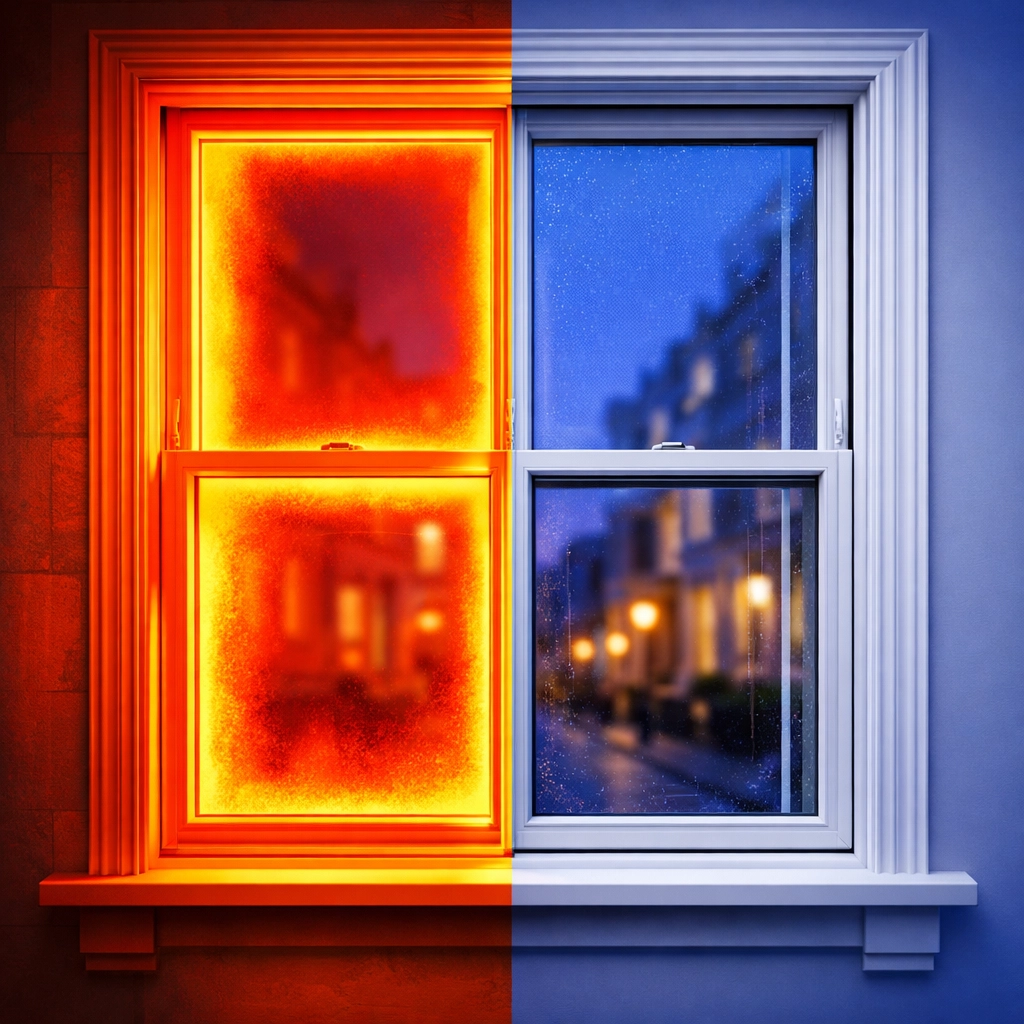
Thermal imaging reveals where your money is escaping — U-values quantify the loss.
The Comparative Performance: How Secondary Glazing Stacks Up
To appreciate the technical efficiency of secondary glazing, we have to look at it in context. Many people assume that replacing old windows with standard double glazing is the only way to achieve thermal comfort. The data tells a different story.
Glazing Type
Typical U-Value (W/m²K)
Thermal Efficiency Note
Single Glazing
5.8
Effectively a “hole” in your thermal envelope.
Standard Double Glazing
2.8
The baseline for modern building regs.
Standard Secondary Glazing
For expert secondary glazing advice and free consultations for listed buildings in London, contact Secondary Glazing Specialist on 020 7060 1572.
Thermal Performance6 min readEst. £5,000 – £20,000
Understanding U-Values: The Science of Thermal Efficiency in Secondary Glazing
J
James Whitfield
Conservation Planning Advisor
When we talk about home improvement, specifically in the context of drafty period properties or modern flats in the heart of the city, “thermal efficiency” is a term that gets thrown around constantly. But for the discerning homeowner or property manager, vague promises of “warmth” aren’t enough. You need the data. You need to understand the physics of heat loss and the specific metrics that determine whether an investment is worth the capital.
In the industry, the gold standard for measuring this performance is the U-Value. If you are looking for secondary glazing London specialists to upgrade your heritage home, understanding this number is the difference between a superficial fix and a high-performance thermal upgrade.
In this technical guide, we’re going to unpack the science of U-Values, explain why secondary glazing is often a superior thermal performer to standard double glazing, and look at the components: from Low-E coatings to air gaps: that drive these numbers down.
What Exactly is a U-Value?
Technically known as Thermal Transmittance, the U-value measures the rate of heat transfer through a structure (like a window, wall, or roof) divided by the difference in temperature across that structure.
The units are expressed as W/m²K (Watts per square metre-Kelvin).
Here is the simple rule: The lower the U-value, the better the insulator.
A high U-value means heat is escaping rapidly from your warm living room into the cold London air. A low U-value means the material is resisting that heat flow, keeping the energy: and your money: inside the building.
Thermal imaging reveals where your money is escaping — U-values quantify the loss.
The Comparative Performance: How Secondary Glazing Stacks Up
To appreciate the technical efficiency of secondary glazing, we have to look at it in context. Many people assume that replacing old windows with standard double glazing is the only way to achieve thermal comfort. The data tells a different story.
Glazing Type
Typical U-Value (W/m²K)
Thermal Efficiency Note
Single Glazing
5.8
Effectively a “hole” in your thermal envelope.
Standard Double Glazing
2.8
The baseline for modern building regs.
Standard Secondary Glazing
2.0 - 2.5
Beats standard double glazing in many retrofit scenarios.
High-Spec Secondary (with Low-E)
1.8 or lower
Competes with high-end, argon-filled double glazing.
As the table shows, an unimproved single-pane window has a U-value of approximately 5.8. By adding a professionally installed secondary unit, you can reduce that heat loss by over 60%. When you move into high-specification glass types, you are approaching the thermal performance of triple glazing, but without the need to tear out your original window frames.
The Role of the Air Gap: Convection vs. Conduction
The secret weapon of secondary glazing isn’t just the second pane of glass; it’s the air trapped between the two.
In a standard double-glazed sealed unit (IGU), the gap between the panes is usually quite small: typically 12mm to 20mm. This is optimized for the manufacturing of a portable unit. However, secondary glazing allows for a much larger cavity.
The 100mm “Sweet Spot”
From a purely thermal perspective, an air gap of around 20mm is often cited as the point of “diminishing returns” for conduction. If the gap is too small, heat transfers easily through conduction. If the gap is too large (over 100mm), air currents can start to circulate within the gap (convection), which can actually begin to move heat from the inner pane to the outer pane.
However, many secondary glazing installers recommend a gap of 100mm. Why? Because this is the “Goldilocks” zone where you achieve a massive reduction in noise pollution (acoustic insulation) while still maintaining a high level of thermal resistance. Even at 100mm, the convective heat loss is minimal compared to the massive gains made by eliminating draughts and adding a second barrier of glass. For more on optimising for both thermal and acoustic performance, see our guide on 10.8mm acoustic laminate glass.
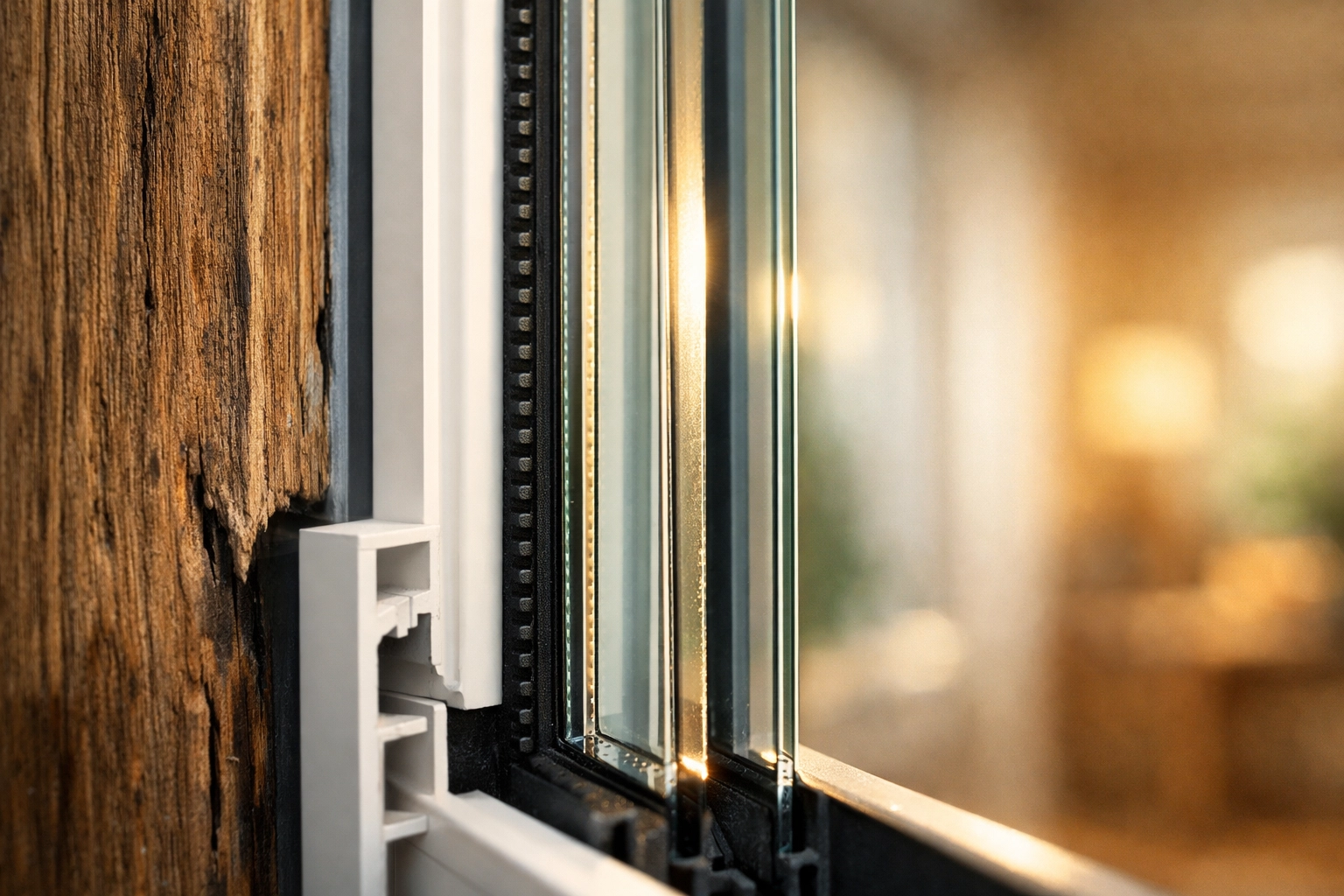
The insulating air cavity — where thermal physics meets practical design.
Low-E Glass: The Science of Emissivity
If you want to push your U-values toward the 1.8 mark, you need to talk about Low-E (Low-Emissivity) glass.
Standard glass is quite “emissive,” meaning it absorbs and then radiates heat. In the winter, the heat from your radiators hits the glass, is absorbed, and is then radiated out to the cold exterior.
Low-E glass has a microscopically thin, transparent coating of metal or metallic oxide. This coating is designed to:
Allow short-wave radiation (light) to pass through, keeping your rooms bright.
Reflect long-wave radiation (heat) back into the room.
When we install secondary glazing with a Low-E coating on the “internal” face of the secondary pane (the side facing the cavity), it acts as a thermal mirror. It bounces the heat back toward your living space, significantly lowering the U-value of the entire window assembly.
Eliminating Convective Heat Loss (The End of Draughts)
While U-values primarily measure the heat passing through materials, we cannot ignore the impact of air leakage. In many London properties, especially those with original sash windows, a huge portion of heat loss isn’t through the glass: it’s through the gaps around the frame.
This is known as convective heat loss.
Professional secondary glazing creates an internal air-tight seal. Unlike primary windows, which have to deal with the expansion and contraction of the building’s exterior fabric, secondary glazing is installed within the reveal. High-quality seals (such as twin-fin brush seals or compression gaskets) ensure that draughts are eliminated. For more on thermal improvements in heritage properties, see our guide on insulating a listed building without planning permission.
By stopping the physical movement of cold air into the building, you allow the U-value of the glass to do its job effectively. Without an air-tight seal, even the most expensive glass will underperform because the “warm” air you are trying to save is simply blowing out through the cracks.
Draught-proof seals — the unsung hero of thermal performance.
Technical Configurations and Styles
The thermal performance is also influenced by the frame’s integrity and how it integrates with your existing windows. Choosing the right configuration is vital. For example, a hinged unit might offer a slightly tighter compression seal than a horizontal slider, though both will drastically outperform a single-glazed window.
If you are unsure which configuration will best serve your property’s thermal needs, browse our technical guides on vertical sliders for sash windows, lift-out panels, and fixed units to see how different frames interact with your existing architecture.
Why Accuracy Matters for London Homeowners
In a city like London, where property values are high and energy costs are rising, the technical specifications of your windows matter. “Secondary glazing London” is a competitive market, but the difference between a “DIY plastic sheet” and a “bespoke aluminum secondary system” is found in the U-value data. For a comparison of budget and professional options, see our guide on magnetic secondary glazing.
Summary: The Technical Advantage
To summarize the technical strengths of secondary glazing:
Drastic U-Value Reduction: Moving from 5.8 down to 1.8-2.2.
Customizable Air Gap: The ability to balance thermal insulation with world-class acoustic performance.
Radiation Control: Using Low-E coatings to reflect heat back into the home.
Draught Elimination: High-performance seals stop convective heat loss that primary windows often let slip.
Secondary glazing isn’t just a “second best” option to replacement windows. From a technical and thermal perspective, it is often the superior choice for heritage and listed buildings where maintaining the external aesthetic is required but modern thermal performance is non-negotiable.
By understanding these technical specs, you can make an informed decision that goes beyond aesthetics. You are investing in the thermal envelope of your building, ensuring that every watt of energy used to heat your home stays exactly where it belongs.
For Listed Property Owners
Get a Free Secondary Glazing Quote
London's leading secondary glazing specialists for Grade I, Grade II, and Conservation Area properties. Every project begins with a complimentary heritage survey.